
Choosing a Passenger Electric Tricycle: Seating, Battery and Daily Use
A passenger electric tricycle should fit the people, route and parking space it will serve. Start with the seating arrangement and the distance between charging opportunities. Then compare the battery configuration, motor specification, brakes and access to replacement parts. A higher voltage or a larger number in a product name cannot answer those questions on its own.
Mingdao's current passenger electric tricycle listings include 48V and 60V lead-acid configurations, removable-battery descriptions, reverse gear and different seating layouts. This guide compares four catalogue entries and explains what a distributor or importer should confirm before ordering. The product information was reviewed on November 4, 2026. Listed features describe the catalogue configuration; the written quotation should identify the version supplied.
Which passenger electric tricycles should a buyer compare?
Four Mingdao products provide a useful starting point: the Electric Tricycle with Removable Battery, the Electric Tricycle for Shopping and Errands, the Family Electric Tricycle for Urban Travel and the Family Electric Tricycle with Three Seats. These are separate product entries, rather than four names for one specification.
The first listing describes a 48V lead-acid battery, an LCD display, reverse gear and a removable battery. The urban-travel listing also describes a 48V lead-acid configuration, with a 600W motor in its technical table. The shopping model lists a 60V lead-acid configuration and an 800W motor. The three-seat family model also lists 60V and 800W. These figures help identify the products under discussion, but they do not establish passenger capacity, climbing performance or suitability for a particular road.
Keep the product link beside every quotation line. Similar body shapes and overlapping features can make a conversation drift between models. Ask the supplier to identify the selected model, battery version, seating arrangement and included accessories on the same document. That record is more useful than a collection of screenshots with different specifications.
| Mingdao catalogue entry | Listed battery configuration | Listed motor | Point to confirm |
|---|---|---|---|
| Electric Tricycle with Removable Battery | 48V lead-acid | Request written specification | Battery removal procedure and seating |
| Electric Tricycle for Shopping and Errands | 60V lead-acid | 800W | Seating layout and shopping storage |
| Family Electric Tricycle for Urban Travel | 48V lead-acid | 600W | Permitted load and intended route |
| Family Electric Tricycle with Three Seats | 60V lead-acid | 800W | Approved passenger arrangement and load |
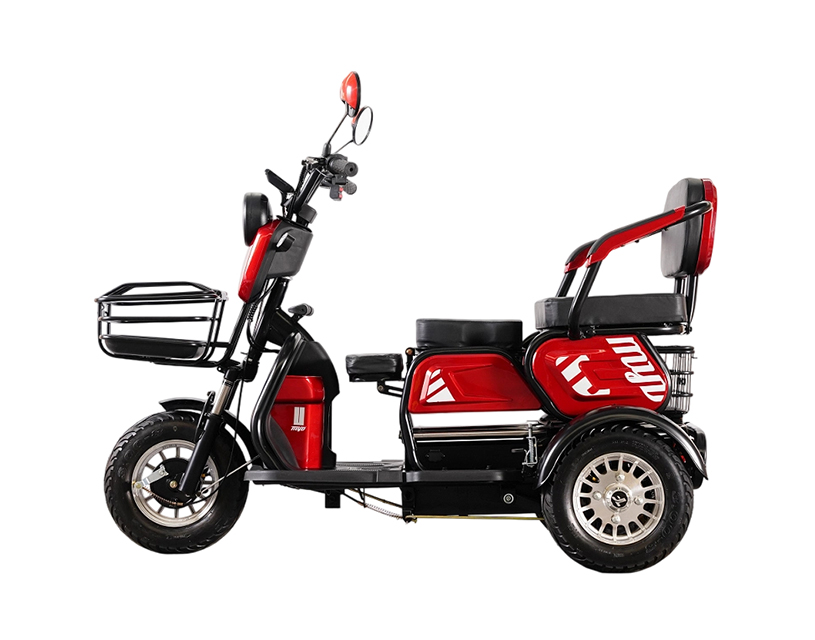
Product photograph: Mingdao Electric Tricycle with Removable Battery. The reviewed listing describes a 48V lead-acid configuration.
Begin with the journey the customer actually makes
Describe a normal day before selecting a vehicle. A shopping trip might include a short journey to a market, repeated parking and bags carried home. A family journey might involve different passengers on different days. A vehicle used around private premises may face narrow passages, ramps or frequent reversing. Each pattern creates a different purchasing question.
Record the longest expected journey between charging opportunities, the surfaces travelled and the space available at both ends. A route that is flat for most of its length may still include one difficult entrance. Measure that entrance and discuss the gradient with the supplier. Do not infer climbing ability from motor wattage without a model-specific assessment under an agreed load.
For a distributor, this exercise also clarifies the intended customer. One display vehicle may attract several groups of buyers, but their requirements need separate answers. Someone carrying groceries may value access to a basket. Another customer may need a particular seat height or easier access to the controls. Those needs should be checked with the actual vehicle rather than assumed from a category such as family electric tricycle.
Avoid presenting three wheels as a guarantee against tipping. Vehicle handling still depends on speed, turning, surface conditions, load and the design of the particular model. A sample evaluation should follow the supplied instructions and take place in a suitable controlled setting. The aim is to find a vehicle that fits the use, with clear information for the eventual operator.
What does the seating arrangement tell you?
The number of visible cushions does not establish the approved number of occupants or the maximum load. Ask for the seating specification, rated load and any restrictions that apply to the selected vehicle. A photograph can show the arrangement, but it cannot replace those figures. The three-seat family listing gives buyers a reason to ask about passenger layout; it does not answer every passenger-use question.
Check the space around the operator as well as the passenger position. Access to the seat, foot placement, reach to the controls and visibility around the vehicle all affect day-to-day usability. An importer can request photographs taken from the operator's position and a video showing entry, seating and movement of any adjustable parts. A sample should confirm the details that matter to the target customer.
Storage needs should be considered alongside seating. A bag placed where a passenger's feet belong changes how the vehicle can be used. Ask where shopping or personal items are intended to be carried and how the permitted load is distributed. Do not add a box, seat or rear platform without the supplier's confirmation that the change is suitable for that configuration.
For dealer staff, a short seating checklist can prevent misunderstandings during demonstrations. Identify the intended operator, permitted passenger arrangement, storage location and loading instructions. Keep that information with the vehicle documentation. A clear explanation at the point of sale is more useful than describing every model as suitable for every member of a family.
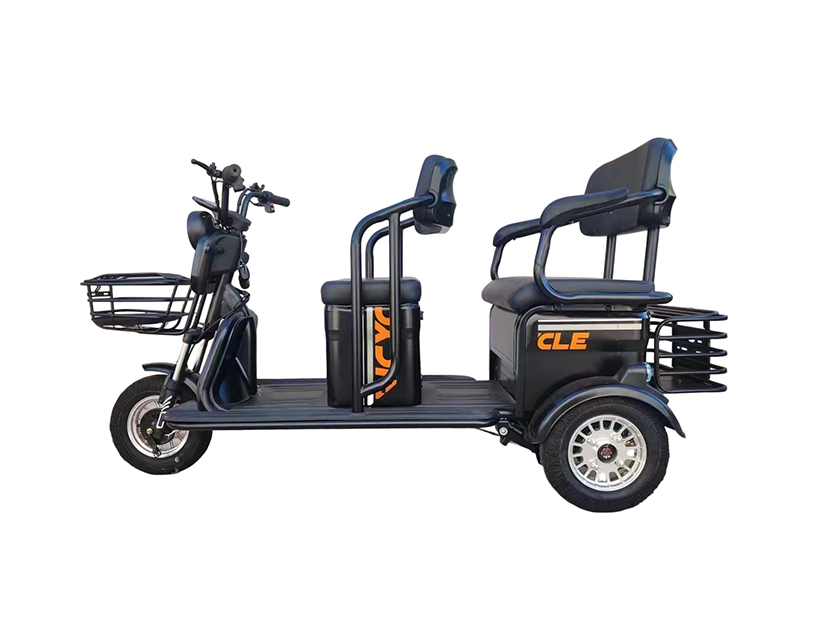
Product photograph: Mingdao Family Electric Tricycle with Three Seats. Confirm the seating and battery configuration in the quotation.
How should buyers compare 48V and 60V configurations?
Voltage is one part of an electrical system. It does not identify the battery capacity, vehicle range or complete performance of the tricycle. Mingdao's reviewed listings include 48V and 60V passenger models, so a buyer should compare the complete configuration rather than treat the voltage label as a ranking.
Ask for the battery chemistry, nominal voltage, capacity with its unit, charger specification and installation arrangement. The current catalogue uses shorthand such as 48V20A and 60V20A. A purchase specification should remove that ambiguity by stating the confirmed capacity and its correct unit. Buyers should not silently interpret a shorthand value and then repeat an unverified capacity in their own catalogue.
Keep the charger and battery information on the same order record. A charger supplied for one battery configuration should not be assumed suitable for another. The instructions for the actual product should govern charging, storage and maintenance. If a different battery option is requested, ask the supplier to identify the complete compatible configuration and the documents supplied with it.
Voltage also needs to remain consistent across the dealer's product listing, invoice and replacement-parts record. A customer ordering a replacement charger may describe only the exterior colour or a general model name. A dealer who retained the exact electrical configuration can ask the right follow-up questions. This is a practical reason to record the specification at purchase, even when two vehicles look almost identical.
Does a removable battery make charging easier?
A removable battery can be useful when the vehicle cannot be parked beside an appropriate charging location, but removal needs to be practical for the intended operator. The listing alone does not establish the battery assembly's weight, handle design, access method or connector arrangement. Request those details before making removable charging a central selling point.
The removable-battery electric tricycle is a suitable product page to begin that discussion. Ask for a demonstration showing the complete removal and refitting procedure. Confirm which tools, access panels or locking arrangements are involved and whether the operator is expected to carry the complete battery assembly. A photograph of an open compartment answers fewer questions than a continuous demonstration.
Think through the customer's premises. A battery that can be removed at ground level may still be inconvenient to carry through a doorway or up stairs. Avoid describing the arrangement as easy for everyone. Ask the intended customer to assess the weight and handling procedure under the supplier's instructions before relying on that charging method.
For after-sales support, record the battery connection and replacement procedure with the vehicle's identification. A dealer should be able to explain which parts apply to the supplied version. Changes in battery housing, connectors or mounting points can affect replacement planning. Ask how a later replacement will be identified, instead of assuming that any battery with the same nominal voltage will fit.
How much meaning should buyers attach to motor wattage?
The technical table lists 600W for the urban-travel family tricycle and 800W for the shopping and three-seat family entries. These numbers identify a difference in the catalogue. They should not be used alone to promise a particular hill-climbing ability, load or speed. Ask whether the quoted figure is a rated value and request the corresponding vehicle specification.
Motor, controller, battery and mechanical configuration work together. A buyer comparing two tricycles should therefore request a complete configuration for each, including the conditions attached to any performance statement. A motor value copied from one listing and a battery value copied from another do not form a valid specification for a third vehicle.
A sample evaluation should reflect the intended journey and agreed load. Record the battery version, tyre specification and test conditions so that the result can be discussed meaningfully. A brief unloaded demonstration on a smooth floor cannot establish performance for a loaded route with slopes. It can still help evaluate controls and access, provided its limits are understood.
For a retail catalogue, translate the specification into a clear description of intended use without inventing performance. State the listed motor and confirmed configuration. Keep claims about gradients, maximum load or range tied to supplier information and documented conditions. Customers can then compare actual differences rather than a series of increasingly large numbers.
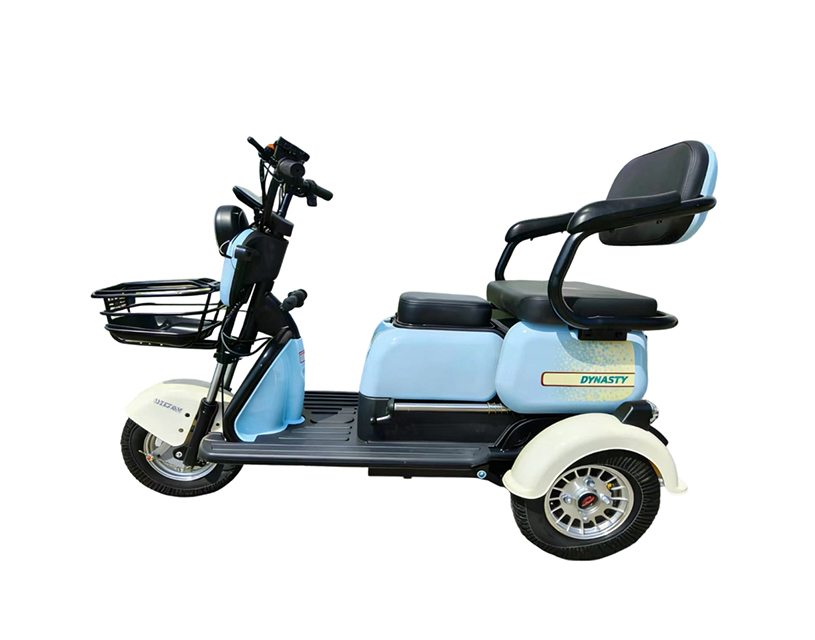
Product photograph: Mingdao Family Electric Tricycle for Urban Travel, listed with a 48V lead-acid configuration and a 600W motor.
Read the range figure with its test conditions
The reviewed passenger listings describe a range of approximately 50–60 kilometres. That is a catalogue statement, not a promise for every passenger, route or battery condition. Before using it in an order plan, ask which configuration was assessed and what load, speed, route and other conditions were used.
A buyer's useful distance is the journey between realistic charging opportunities. Write that distance down and discuss it with the supplier. Include diversions, repeated short trips and the possibility that the vehicle does not start every journey with the same state of charge. Any operating reserve should be agreed for the application, rather than chosen from an unsupported universal percentage.
Ask how the operator is expected to read the charge indication and what the product instructions say about battery care. Dealer staff should explain those instructions consistently. A digital display is a source of information for the operator; the presence of a display does not establish the accuracy of a distance prediction or replace the charging guidance.
Distributors comparing samples can use the same route and record the conditions for each vehicle. This creates a more useful local comparison than repeating a range figure without context. The sample record should identify the vehicle, configuration, load and observations. It should also distinguish a single evaluation from a guaranteed result across all future customers and operating conditions.
Check brakes, tyres and reversing as practical features
The passenger listings mention hand and foot brakes, reverse gear and drum brakes. Confirm which controls operate which brakes on the selected model, and ask for the operating instructions. Dealer demonstrations should follow those instructions. The presence of a particular control does not establish the stopping performance of a vehicle under every load and surface condition.
Reverse gear deserves a practical parking check. Consider the route into a storage area, the space needed to turn and the operator's ability to see behind the vehicle. Confirm the control sequence and any restrictions described by the supplier. A reversing feature may help with manoeuvring, but it does not remove the need for clear space and suitable operating procedures.
Tyre descriptions differ between the reviewed models, including 3.00-8 and 3.00-10 catalogue entries. Retain the full confirmed tyre and rim specification when ordering parts. Do not shorten the description to a generic small tyre or convert the notation into another measurement without checking its meaning. Ask which replacements are approved for the supplied vehicle.
Maintenance access matters to the dealer who will support the product. Request the relevant parts information for brakes, tyres, lamps and controls. A vehicle may be straightforward to display while still requiring specific service parts. Knowing those requirements before the first shipment helps the distributor prepare support instead of discovering each item after a customer needs it.
Use the sample to check fit, parking and storage
A sample order should have a written purpose. For a passenger electric tricycle, that purpose might include confirming operator access, seating layout, storage space and the fit of the vehicle through a customer's entrance. These are observable questions that can be recorded without claiming a laboratory performance test.
Measure the parking space and access route before the sample arrives. Include doorway width, turning space and any height restriction relevant to the vehicle. Ask the supplier for confirmed overall dimensions and clarify whether mirrors or other projecting parts are included. A product photograph taken from one angle can hide the part that determines clearance.
The shopping model's current URL contains the word foldable, but the title and reviewed features do not establish a folding procedure. A buyer who requires a foldable electric tricycle should request a demonstration, folded dimensions and instructions before placing an order. A historical URL is not sufficient evidence that the delivered configuration folds.
Keep the accepted sample's specification and photographs as an order reference. Record any requested changes separately, including colour, branding or accessories. If a later shipment differs from the sample, both parties need to know whether the difference was approved. A simple comparison record helps preserve that distinction without relying on memory or a long message thread.
Plan the dealer's parts and support record
Passenger electric tricycles need a support plan that matches the versions sold. Begin with the parts likely to require identification: tyres, brake components, lights, switches, mirrors, chargers and battery-related fittings. Ask the supplier which parts are shared between models and which depend on a particular production version.
Order spare parts by a confirmed reference, photograph and specification where appropriate. A request for a family tricycle brake may be too broad when several vehicles use that description. A clear parts record connects the customer vehicle to the supplied component. It also helps the dealer explain what information is needed before a replacement can be quoted.
Agree how after-sales enquiries will be documented. The vehicle identification, description of the issue and suitable photographs can help the supplier understand a request. Follow the product's service instructions and use qualified support where required. Do not encourage customers to alter electrical settings or fit unmatched parts simply to keep a vehicle operating.
Warranty terms belong in the written commercial agreement. Confirm their scope, exclusions, evidence requirements and the process for a claim. Avoid turning a general promise of after-sales support into a specific warranty period that has not been agreed. Mingdao's OEM, ODM and after-sales service information provides a starting point for these questions.
What should an electric tricycle quotation include?
A useful quotation identifies the exact product and the complete configuration being priced. Include the product link, model reference, quantity, battery specification, motor specification, seating arrangement, colour and accessories. State which elements are standard and which are optional. This makes comparisons between suppliers and between revisions easier to follow.
Packaging and delivery details should be discussed before the order is fixed. Ask for the agreed packing method, packed dimensions, weights and the assembly work expected at destination. An attractive vehicle price can be difficult to assess if the buyer does not know what arrives in the carton or which parts need fitting. Request the applicable instructions and tools information.
The destination market should also be named. Ask for model-specific documents relevant to that market and have the intended use checked by the appropriate local parties. A brand-level reference to a certificate does not establish the status of every model. Keep the document reference connected to the exact vehicle and configuration being purchased.
Send these requirements through the Mingdao product enquiry page. A short, specific brief produces a more useful discussion than a request for the best electric tricycle. Include the customer's use, the route, the seating requirement and the questions still open. The reply can then address an identifiable purchasing decision.
Passenger electric tricycle questions buyers ask
Are all Mingdao passenger tricycles lithium battery models?
No. The four catalogue entries compared here describe lead-acid configurations. If a lithium battery electric tricycle is required, ask Mingdao whether an appropriate configuration is available for the exact model. Confirm the battery, charger, installation and supporting documentation together. Do not relabel the reviewed lead-acid version as lithium.
Is a 60V electric tricycle always better than a 48V model?
The voltage label does not settle the comparison. Review the complete vehicle configuration, seating, permitted load, route and charging arrangement. The 48V and 60V entries in this guide are useful candidates for a model discussion, but their suitability needs to be assessed against the customer's actual requirements.
Does the three-seat product name establish passenger approval?
The name describes the catalogue presentation. Confirm the approved seating arrangement, rated load, instructions and requirements for the intended market before offering passenger use. A photograph and a product title cannot answer all of those questions. Keep the supplier's written answers with the selected configuration.
Can a dealer order colours and branding for these tricycles?
Mingdao describes customisation services on its service page. Ask which changes are available for the chosen passenger model, what order conditions apply and how the sample will be approved. Submit logo artwork and placement requirements with the enquiry. Obtain a quotation for the requested version rather than assuming every option is included.
Where should a buyer start when several models look suitable?
Begin with the Mingdao electric tricycle catalogue and select the entries that match the intended passenger arrangement. Send the links with a written use description. Ask for the missing dimensions, rated load and battery details before deciding which sample to evaluate. That sequence turns a broad catalogue search into a comparison of identifiable vehicles.
Product pages and enquiries
Electric Tricycle with Removable Battery — product details
Electric Tricycle for Shopping and Errands
Family Electric Tricycle for Urban Travel
Family Electric Tricycle with Three Seats